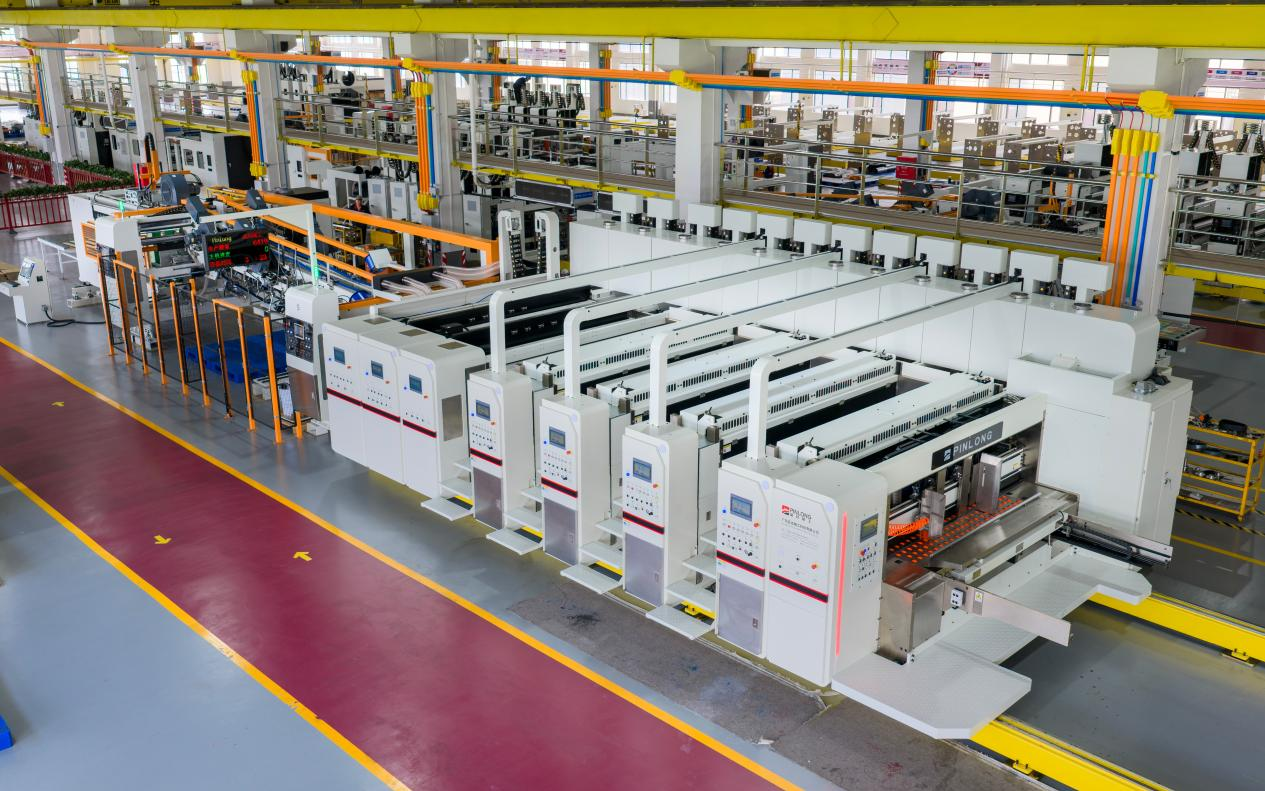

It quickly dries water-based ink after printing to prevent ink smearing and color dragging when boards stack. Electric-heat suction drying conveyance offers lower energy use and uniform, stable drying.

Service
Customer-centric: rapid response to your needs, creating long-term value.
Knowledge Base
Q:What does the drying system do on a printing line?
Q:What advantages does a dual lead-screw slotting mechanism have over a traditional single screw?
Better synchronization of blade disk lateral movement, faster setup changeover and higher slotting accuracy; less vibration at high speed, lower reject rate, suited to multi-size carton production.
Q:What role does the anilox roller play in a flexo printer?
The anilox roller is the core metered ink-transfer component: its surface cells carry ink and transfer it evenly to the plate. Higher line counts produce finer print detail.
Q:How does vacuum suction feeding work on a printer?
The fan creates negative pressure that holds the board through the air box and suction holes; the conveyor feeds boards smoothly, reducing slipping and skewing for stable registration at high speed.
Q:What is lead-edge feeding and what are its advantages?
Pinlong’s lead-edge feeding technology grips the leading edge of the board by vacuum suction for conveyance. High positioning accuracy keeps boards from shifting and suits high-speed production; with an adaptive lifting mechanism, it effectively protects corrugation from crushing.